
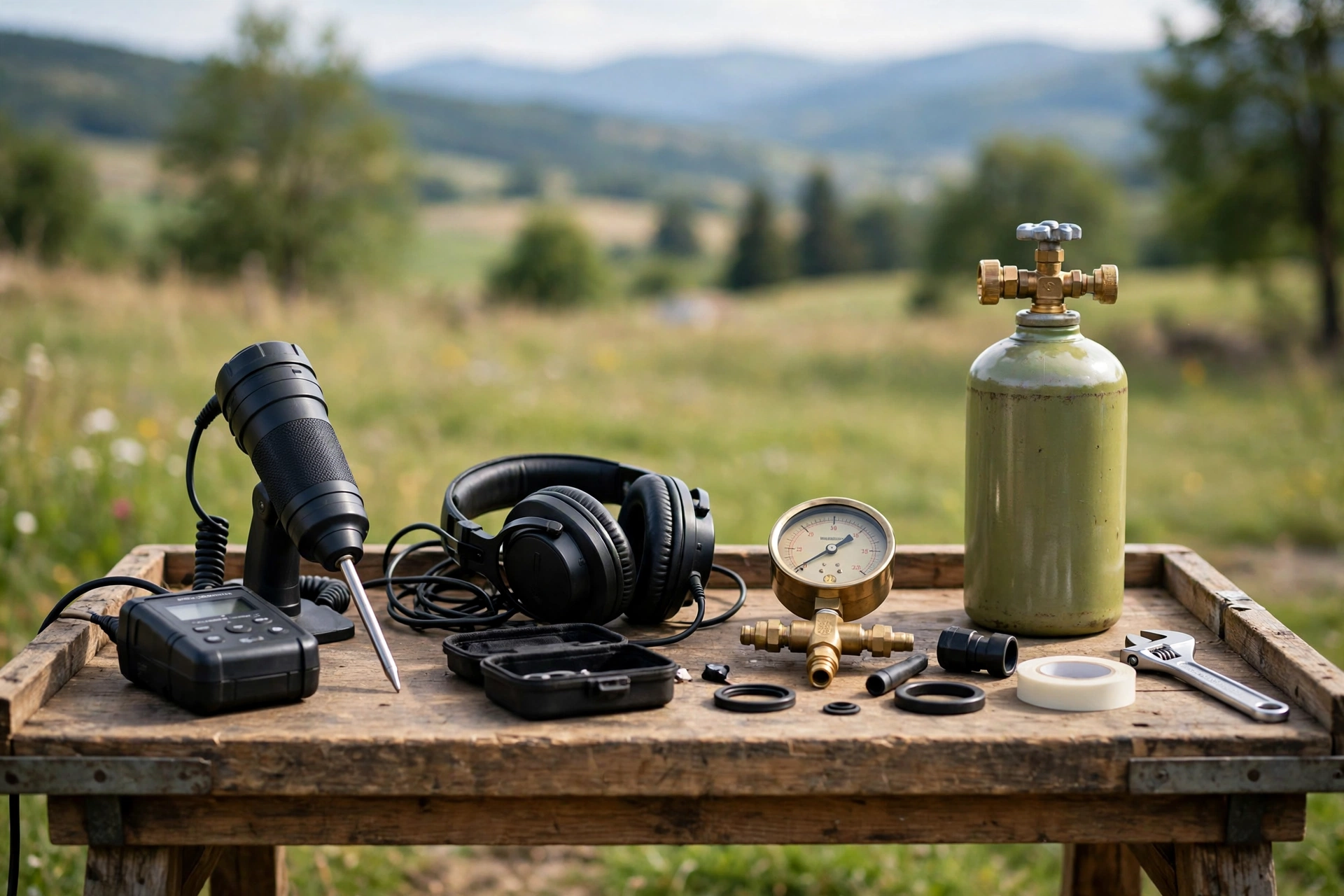
Finding a leak you cannot see is a process, not a guess. The pipe is buried, the water surfaces far from the break, and digging at the wet patch usually finds nothing. This guide explains the methods a provider uses to locate an underground water line leak in Lancaster — acoustic listening, pressure testing, meter checks, and line tracing — and why they work in that order.
Listening for the leak
A leak makes sound. Water escaping from a pipe under pressure produces a hiss that travels through the pipe and the soil, and acoustic listening equipment — a ground microphone and headphones — picks it up from above ground. The provider moves along the line, listening at intervals, and the sound grows louder as the microphone approaches the break.
The method works best on quiet ground: no traffic, no running appliances, and the house as still as possible. It is also the method that gives the most precise location, because the sound is strongest directly over the leak. In Lancaster's clay soils, sound travels well through the compacted ground, which makes acoustic listening the first tool a provider reaches for.
Pressure testing
Pressure testing confirms that a leak exists and narrows down where it is. The provider isolates a section of the line — by closing valves at either end — and watches the pressure. If the pressure holds, that section is sound. If it drops, the leak is in that section, and the search moves to the next, smaller one.
The test is done in stages, from the whole line down to a single section, so the area to search shrinks with each step. It is the method that separates a real leak from a false alarm: a wet patch can have other causes, but a pressure drop in an isolated section means water is leaving the pipe.
The meter check
The meter check is the simplest method and the first one used. With all water in the house turned off — every tap, appliance, and irrigation zone — the provider watches the meter dial or the small leak indicator. If it moves, water is going somewhere, and that somewhere is a leak.
The meter check does more than confirm the leak: it measures it. A fast-moving dial means a large break; a slow creep means a small one. That reading helps the provider judge how urgent the repair is, and whether the line needs a spot repair or a replacement. It is also the check a homeowner can do before calling, and it is the one that most often starts the whole process.
Tracing the line
Before any ground is opened, the provider traces the route of the line. Records from the water company and the property can show where the line was laid, and pipe locating equipment can confirm it from above ground. The route matters because the repair opens the ground over the pipe — and in older Lancaster homes, the route is not always where the records say it is.
Lines laid decades ago were not always recorded accurately, and later work — a driveway, a patio, a new fence — can hide the original route. Tracing avoids the worst outcome in this work: opening ground in the wrong place and finding nothing. A located line is a small trench. An unlocated one is a long one.
Why the wet patch misleads
Water leaking from a buried pipe does not rise straight up. It follows the easiest path through the soil — along the trench the pipe was laid in, downhill with the slope of the yard, or under compacted ground — and surfaces where it finds a way out. The wet patch is where the water escaped, not where the pipe broke, and the two can be yards apart.
That is why the methods in this guide work in the order they do. The meter confirms the leak, the pressure test narrows the section, the listening pinpoints the break, and the tracing confirms the route. Each step replaces a guess with evidence, and the repair opens the ground over the pipe — which may be several yards from the puddle.
From location to repair
Once the break is located and marked, the repair itself is straightforward. The ground over the marked section is opened, the damaged pipe is cut out, and new pipe and fittings are installed in its place. The line is pressure-tested, the trench is backfilled, and the provider explains what was found — including the condition of the rest of the line.
The location is what makes the repair small. A leak found by detection is a single section of pipe, opened and replaced. A leak found by digging is a trench across the yard. The difference is the work described in this guide, done before any ground is opened. Call (740) 334-4561 to arrange it.
When detection cannot find it
Detection finds most leaks, but not every leak gives itself away easily. A very small leak makes very little sound, and the acoustic method needs enough noise to hear. Plastic pipe carries sound poorly compared with metal, so a leak in a PEX or PVC section is harder to hear from above ground. And a line with more than one leak can confuse the search, because the sound comes from two places at once.
When listening alone is not enough, the other methods fill the gap. Pressure testing isolates one section at a time until the drop points to the leak, and the meter check confirms that water is still moving. Line tracing confirms the route, so the search stays on the pipe. A provider who has all four methods does not need to guess — and does not need to dig to find out.
Related services and areas
Related services: Water Service Line Leak Detection, Underground Water Line Leak Repair. This guide applies across Lancaster, including West Side and all Lancaster neighbourhoods. Also read the blog index for more guides.
Questions, answered
Do you have to dig up the whole yard?
No. Detection locates the break first, and only the marked section is opened for the repair. The rest of the yard stays untouched, and the trench is backfilled once the repair is tested.
How accurate is leak detection?
The methods locate the break within a small area above ground, and the repair confirms it when the pipe is exposed. The location is precise enough that the trench stays limited to one section.
What if the line is very deep?
Depth affects the work, but the methods still apply: acoustic listening, pressure testing, and meter checks all work from above ground. Your provider will explain the approach for your line after the first look.
Does detection work on plastic pipe?
It works, but it is harder. Sound does not travel as far through plastic pipe as it does through metal, so acoustic listening alone may not pinpoint the break. Pressure testing and meter checks fill the gap, and the combination of methods locates the leak.