
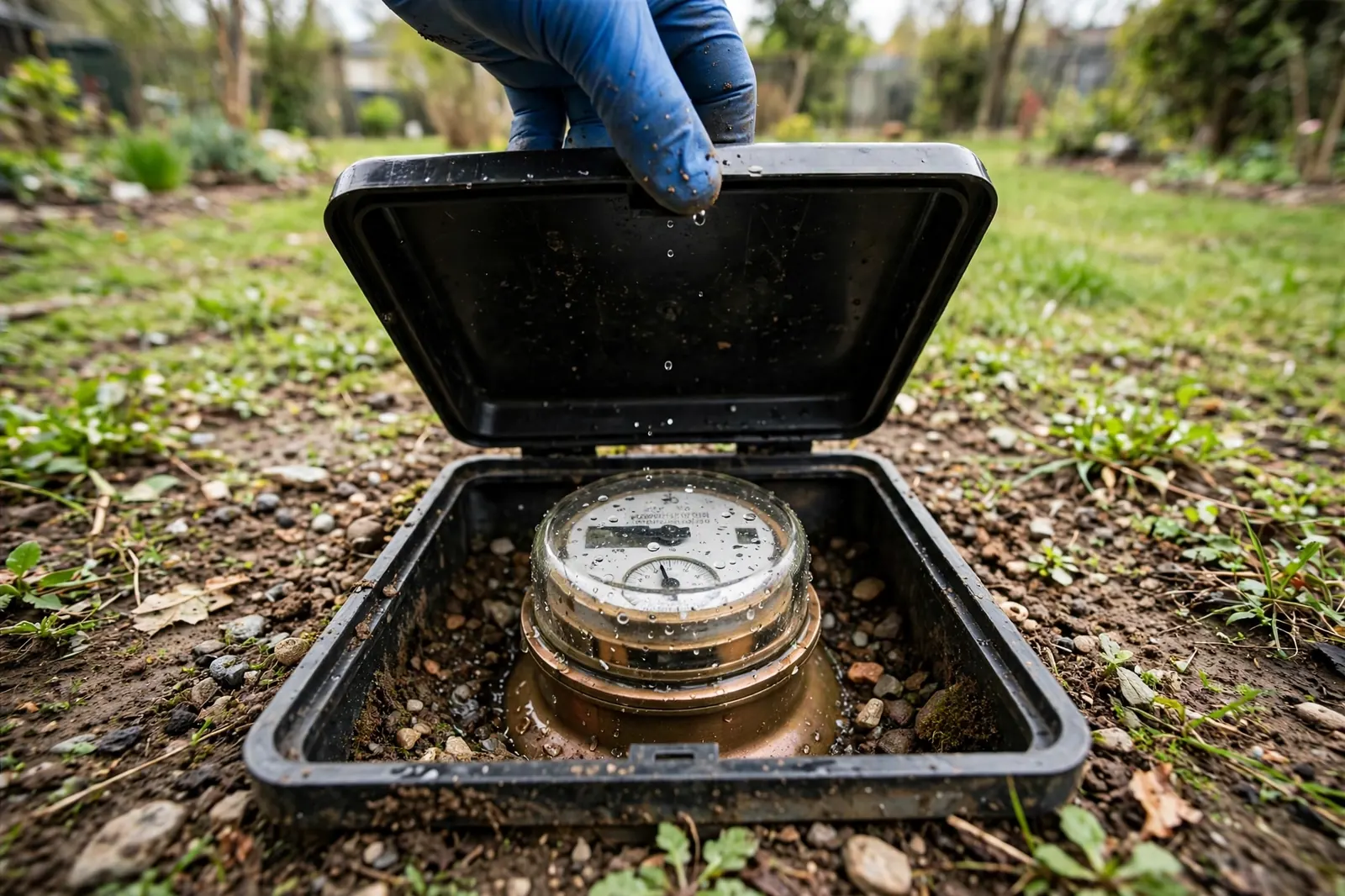
A high water bill leak investigation finds out whether a hidden leak is behind a sudden increase in your water bill. The water meter is the starting point: it records every gallon that passes into the property, so when the bill jumps without a change in how you use water, the meter can show whether water is still moving when everything is off. If it is, something is leaking — and the investigation finds what.
The usual causes are a short list. A leak in the water service line, between the meter and the house, is the most serious. A running toilet can waste a large amount of water without a sound. An irrigation zone can leak every time the system runs. A pool or spa leak is less common, but it belongs on the list. The investigation checks them in order, starting with the meter, so the cause is found by evidence rather than by guessing.
What high water bill / water meter leak investigation includes
- A meter reading and movement check, with all water in the house turned off
- Fixture checks, including toilets and faucets that run without being noticed
- A pressure test of the service line to confirm or rule out an underground leak
- An irrigation zone check where a sprinkler system is in use
- A written summary of the findings and the repair options
How it works
Call (740) 334-4561 and describe the bill and when it changed. We connect you with a local Lancaster provider.
The provider reads the meter with all water off and watches for movement.
Fixtures, irrigation, and the service line are checked in turn until the cause is found.
You get a summary with the cause and the repair options, with cost factors explained.
High Water Bill / Water Meter Leak Investigation in Lancaster
Lancaster homes are a good fit for this investigation because so many of them have older service lines. Homes built before 1970 often still have galvanized or lead lines, and corrosion opens slow leaks that show up first as a climbing bill rather than a visible puddle. Hocking River valley freeze-thaw cycles add to the risk, shifting the ground around buried lines. A bill that jumps in winter or spring, with no change in use, is worth a meter check before the leak has months to run.
The meter test you can do yourself
Turn off every tap, appliance, and irrigation zone in the house, then look at the water meter. Watch the dial or the small leak indicator for a short while. If it moves at all with everything off, water is going somewhere — and that somewhere is a leak. If it does not move, the cause is more likely a fixture or a change in use, and the investigation will check those next.
Read the meter again after a day of normal use and compare it with the same period on an earlier bill. A steady climb with no change in habits points to a slow, constant leak, which is exactly the kind a service line produces. Bring those two readings to the provider: they narrow the search before the visit begins.
Related services and areas
Related services: Water Service Line Leak Detection, Water Service Line Leak Repair. This service is available in Downtown Lancaster, East Side, West Side, South End, and throughout Lancaster. Also read: Why Is My Water Bill Suddenly High?.
High Water Bill / Water Meter Leak Investigation questions, answered
Why did my water bill suddenly go up?
Often a hidden leak: a service line leak, a running toilet, or an irrigation zone leak. The meter check finds which one it is, because each cause is fixed differently.
How does the meter test work?
All water in the house is turned off and the meter is watched. If the dial or leak indicator moves with everything off, water is going somewhere — and that somewhere is a leak.
Could a running toilet cause a high bill?
Yes. A toilet that runs without being noticed can waste a large amount of water, and the investigation checks fixtures first, before the service line is tested.
What if the meter does not move?
Then the cause is more likely a fixture, an irrigation zone, or a change in use. The investigation covers fixtures and irrigation too, so the cause is still found.
What happens after the investigation?
You get a summary with the cause and the repair options. If the service line is leaking, the options are a spot repair or a replacement, with the cost factors explained.