
A sudden high water bill is the most common first sign of a hidden leak, and the most confusing one — because the bill does not say where the water went. It only says how much passed through the meter. This guide walks through the causes in the order a provider checks them, from the most serious to the most ordinary, and shows how the meter test separates one from the other.
Start with the meter
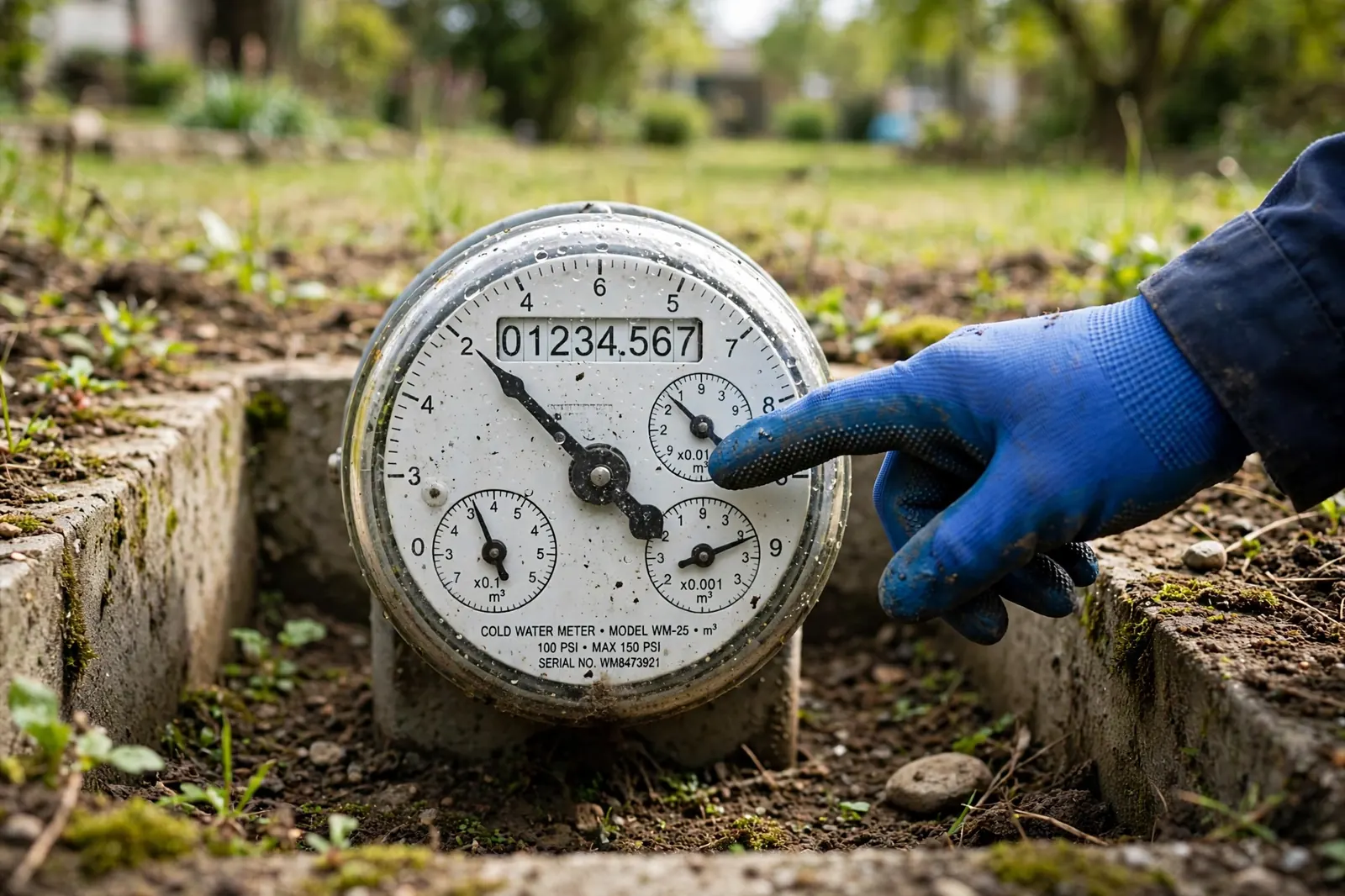
The water meter is the starting point for any high bill, because it records every gallon that enters the property. Turn off every tap, appliance, and irrigation zone, then watch the meter dial or the small leak indicator. If it moves with everything off, water is going somewhere — and that somewhere is a leak.
If the meter does not move, the cause is more likely a fixture, an appliance, or a change in use, and the investigation moves to those next. Either way, the meter reading narrows the search before any work begins. Note the reading and the date, and compare it with the same period on an earlier bill: a steady climb with no change in habits points to a slow, constant leak.
The service line: the most serious cause
A leak in the water service line is the most serious cause of a high bill, because it runs constantly and it is hidden underground. The line carries water from the street main to the house, and a leak in it wastes water every minute of every day — which is why the bill climbs steadily rather than jumping once.
Lancaster lines fail for local reasons: freeze-thaw cycles in the Hocking River valley shift the ground around buried pipe, central Ohio clay soils swell and shrink with moisture, and many homes built before 1970 still have galvanized or lead lines that corrode from the inside. A bill that jumps in winter or spring, with no change in use, is worth a detection check.
The running toilet
A toilet that runs without being noticed is one of the most common causes of a high bill, and one of the easiest to miss. The flapper — the rubber seal at the bottom of the tank — wears out over time, and water slips past it into the bowl in a steady, silent stream. The toilet never looks broken, because it is not: it is just leaking.
The check is simple. Put a few drops of food colouring in the tank and wait. If colour appears in the bowl without a flush, the flapper is leaking. A running toilet is a fixture repair, not a line repair — but it belongs on the list, because it is the cause a provider checks before the service line is tested.
Irrigation and outdoor use
A sprinkler system can waste a large amount of water without anyone noticing, because it runs on a timer. A leaking irrigation zone loses water every time the system runs, and a broken head or a cracked lateral can run for a whole season before the soggy patch gives it away. Outdoor taps left dripping, and hoses left running, add to the same total.
A pool or spa leak belongs on the list too, though it is less common. Evaporation accounts for some loss, but a steady drop in the water level that cannot be explained by weather points to a leak in the pool plumbing. Any of these causes is fixed differently from a service line leak, which is why the investigation checks them in turn.
Changes in use
Not every high bill is a leak. Guests staying for a week, a new washing machine or dishwasher, a filled pool, or a new lawn that needs daily watering can all push a bill up sharply. The pattern is the clue: a change in use raises the bill for as long as the use continues, then it falls back. A leak raises the bill and keeps it raised.
Compare the bill with the same period last year. If the use has not changed and the bill has climbed for two or three months, the cause is more likely a leak than a habit. If the use has changed, the bill should settle when the use does.
What to do about a high bill
Start with the meter test: all water off, watch the dial. Then check the obvious fixtures — toilets, faucets, and the irrigation system. If the meter moves with everything off, or if the bill stays high after the fixtures are checked, call for a high water bill leak investigation.
The provider reads the meter, checks the fixtures, pressure-tests the service line, and checks the irrigation zones, in that order. You get a summary with the cause and the repair options, with the cost factors explained. Call (740) 334-4561 and describe the bill and when it changed.
Reading your bill like a detective
Your water bill carries more information than the total. Compare the usage — not just the amount — with the same period last year, and with the month before. A steady climb over two or three months, with no change in habits, points to a slow, constant leak. A sudden jump in a single month points to a break, a running fixture, or a change in use that started that month.
Note the dates, too. A bill that jumps in winter or spring, when freeze-thaw cycles work the ground, points to the service line. A bill that jumps in summer, when irrigation runs daily, points to a sprinkler zone. Bring the last three bills to the provider: the pattern in them narrows the search before the visit begins, and it often names the cause.
Related services and areas
Related services: High Water Bill / Water Meter Leak Investigation, Water Service Line Leak Detection. This guide applies across Lancaster, including East Side and all Lancaster neighbourhoods. Also read the blog index for more guides.
Questions, answered
How much water can a leak waste?
A steady leak wastes a large amount of water across a month, because it runs constantly — day and night, whether anyone is using water or not. That is why the bill climbs steadily rather than jumping once, and why a leak found early costs less than one found late.
Should I call the water company first?
The water company can check the meter and the main in the street. The customer-owned portion of the line — from the meter to the house — is yours, and a leak in it is work for a local provider. If the meter test points to your line, call (740) 334-4561.
Can a high bill be a meter error?
Meters can misread, but a leak is far more common than a meter error. The meter test and an investigation will show which it is: a moving meter with all water off means a leak, and a still meter with a high bill points to use or a fixture.
How do I read my water meter?
Find the meter — usually near the street, in a ground-level box — and read the dial and the small leak indicator. One cubic foot on the dial is about seven and a half gallons. With all water off, watch the indicator: any movement means water is going somewhere, and that somewhere is a leak.