
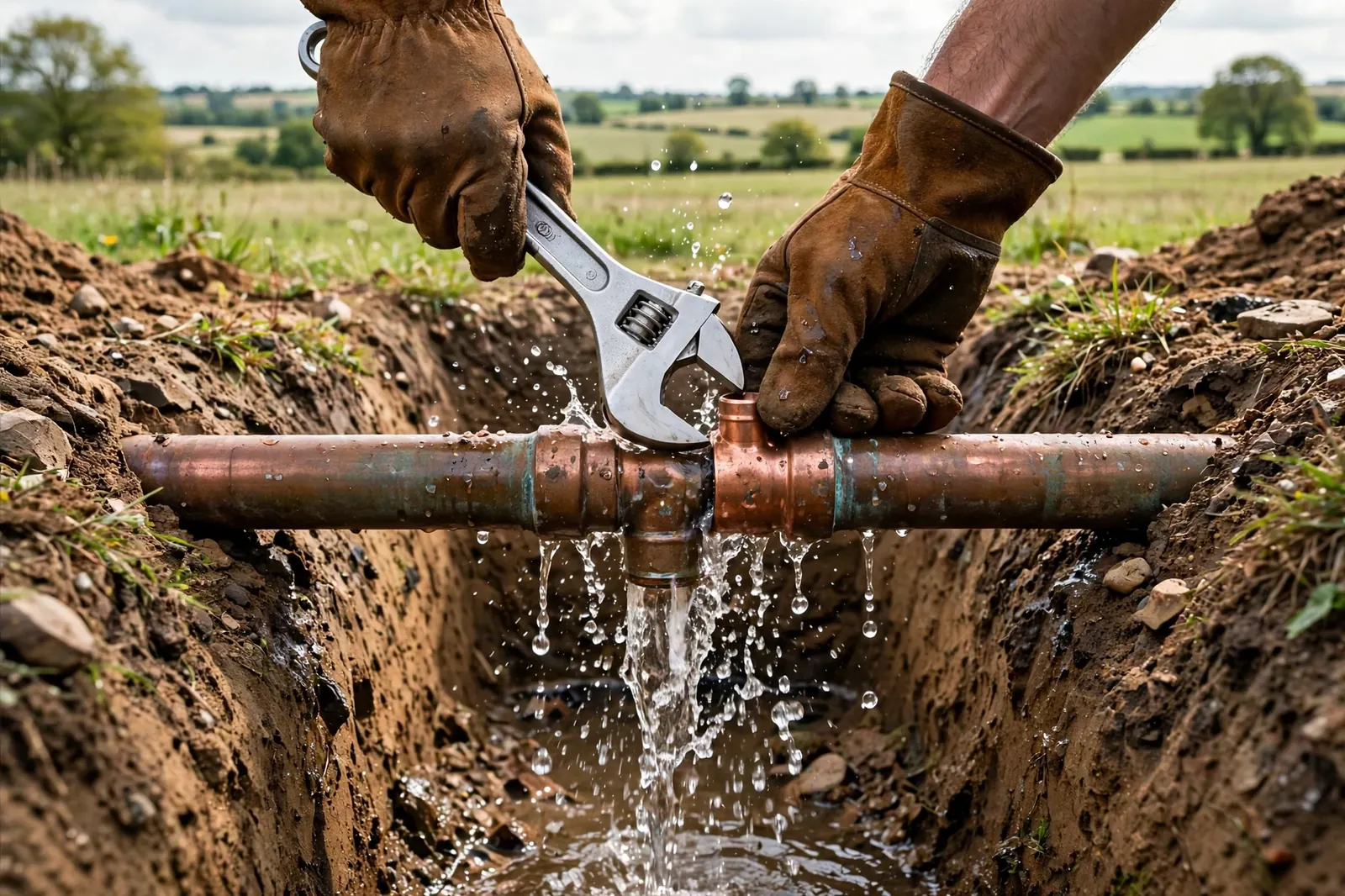
Water service line leak repair fixes the pipe that carries water from the street main into your home. When that line leaks, water is wasted, the soil around the pipe is undermined, and the bill climbs while the damage spreads underground. A repair starts with finding the leak, then opens the ground over that one section, cuts out the damaged pipe, and fits new pipe and connections in its place.
Lancaster lines fail for a few local reasons. Freeze-thaw cycles in the Hocking River valley shift the ground and stress buried pipe. Central Ohio clay soils swell when wet and shrink when dry, which moves the line a little at a time. Older galvanized and lead lines corrode from the inside, and tree roots press against shallow lines. The repair that fits depends on the cause: a single split in a sound line is a spot repair, while a line that has corroded through needs more.
What water service line leak repair includes
- Location of the leak before any ground is opened
- Spot repair of the damaged section with new pipe and fittings
- Replacement of corroded sections when a spot repair will not hold
- New connections and a shutoff valve where the line enters the house
- Trench backfilled and the surface left tidy after the work
How it works
Call (740) 334-4561 and describe the signs. We connect you with a local Lancaster provider.
The provider confirms the leak and marks its position, so only the damaged section is opened.
The damaged pipe is cut out and new pipe and fittings are installed in its place.
The line is tested for pressure and leaks, the trench is backfilled, and the findings are explained.
Water Service Line Leak Repair in Lancaster
Lancaster homes built before 1970 often still have galvanized or lead service lines, and those lines are the ones most likely to need repair rather than a quick patch. Ohio law adds a real consideration here: under Ohio Revised Code 4909.174, in effect since March 20, 2026, water-works companies must reimburse customers who replace a customer-owned lead service line, when the line is confirmed as lead or ordered replaced and the request is made within twelve months of completion. If a repair uncovers a lead line, replacement may qualify for that reimbursement — ask your provider about it before the work begins.
Spot repair or full replacement?
A spot repair makes sense when the damage is limited to one section and the rest of the line is sound — a single split from ground movement, or one joint that has failed. The repair is smaller, the digging is limited, and the line is back in service quickly. It is the right answer for a newer line with one clear problem.
Full replacement makes sense when the line has failed more than once, when corrosion runs through it, or when the pipe is lead. Replacing the whole line costs more in digging and materials, but it ends the cycle of repeat leaks and removes the lead from the property. Your provider will show you which situation your line is in, so the choice is based on the pipe, not on a guess.
Related services and areas
Related services: Water Service Line Leak Detection, Water Line Replacement & Repiping. This service is available in East Side, West Side, North End, South End, and throughout Lancaster. Also read: Repair vs. Replace: Your Water Service Line in Lancaster.
Water Service Line Leak Repair questions, answered
How is a water service line leak repaired?
The leak is located first, then the ground over that section is opened, the damaged pipe is cut out, and new pipe and fittings are installed. The line is pressure-tested, the trench is backfilled, and the provider explains what was done.
How long does a repair take?
It depends on the depth of the line, the soil, and how much pipe must be replaced. A single spot repair is a smaller job than a full line replacement, and your provider will explain the expected scope after the line is located.
Will my yard be dug up?
Only the section over the leak is opened. Detection keeps the digging limited to the damaged area, and the trench is backfilled once the repair is tested.
Can a leak be repaired without replacing the whole line?
Yes. When the rest of the line is sound, a spot repair of the damaged section is the usual answer. Replacement is for lines that have corroded through, failed repeatedly, or are made of lead.
What if the line is lead?
Replacement is the usual answer for a lead line. Under Ohio Revised Code 4909.174, water-works companies reimburse customers who replace a confirmed lead customer-owned line when the request is made within twelve months of completion.