
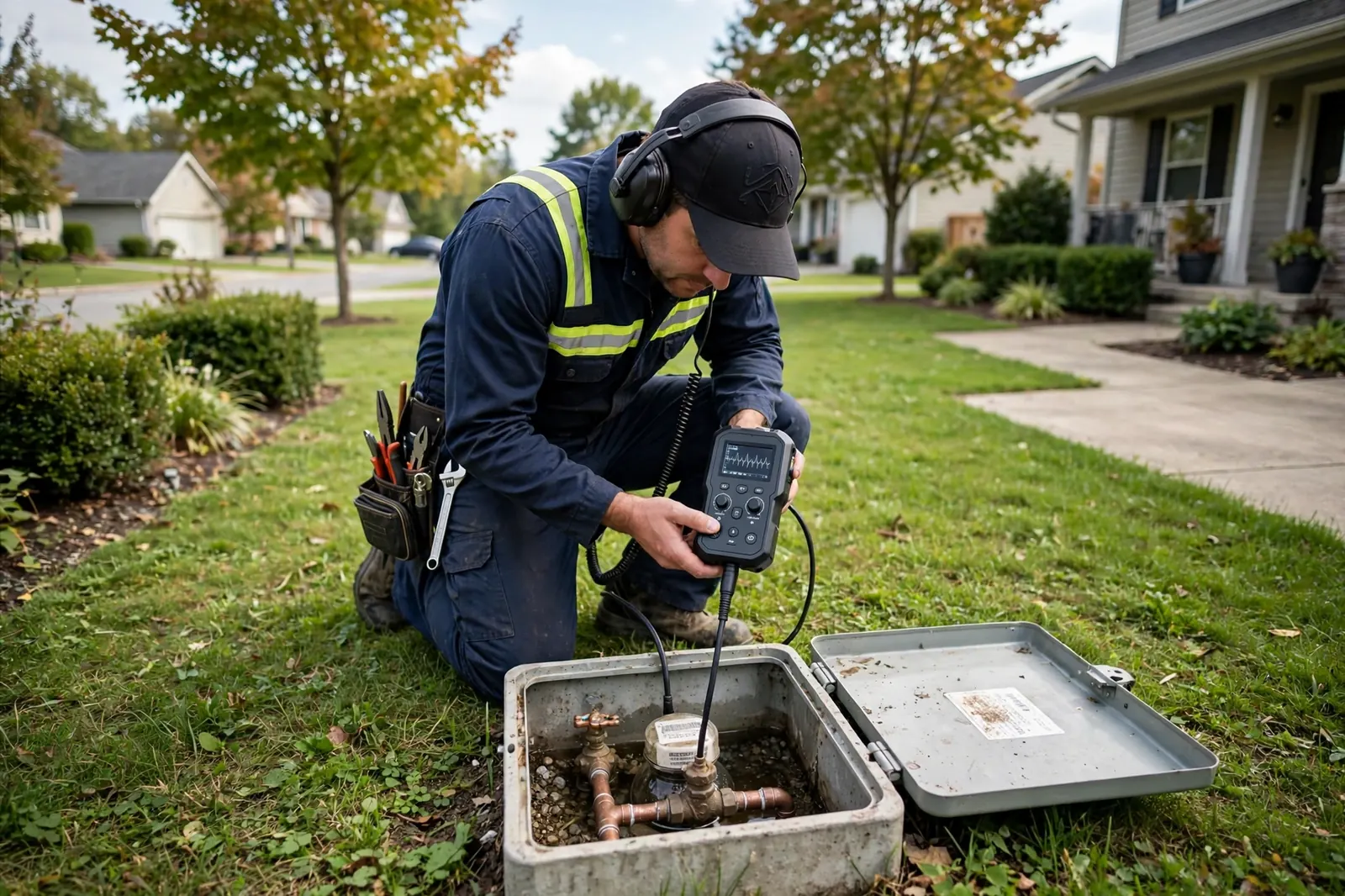
Water service line leak detection finds a leak you cannot see. The water service line runs underground from the street main to your house, so when it leaks, the water often disappears into the soil instead of pooling where you can see it. Detection uses sound, pressure, and your water meter to locate the leak from above ground, so the repair can start at the right spot instead of with a trench across the yard.
The signs of a hidden leak are easy to miss at first: a water bill that climbs for no clear reason, a damp patch in the yard that never dries, water pressure that slowly drops, or the faint sound of running water when every tap is off. A water meter that keeps moving with all the water off is one of the clearest clues. Detection confirms whether a leak exists and, just as importantly, where it is — an underground or buried line leak can surface far from the actual break.
What water service line leak detection includes
- Acoustic listening along the line and at the meter to hear water escaping
- Pressure testing that confirms whether the service line is losing water
- Meter checks showing water moving when nothing in the house is running
- A marked leak location, so any digging stays limited to one area
- A plain-language summary of what was found and the next steps
How it works
Call (740) 334-4561 and describe the signs — the bill, the wet patch, the pressure. We connect you with a local Lancaster provider.
The provider listens along the line, tests the pressure, and checks the meter to confirm a leak exists.
The leak is located and marked above ground, so the repair opens only the section that needs work.
You get the findings and the repair options, with the cost factors explained before any work begins.
Water Service Line Leak Detection in Lancaster
Lancaster adds its own reasons for hidden line leaks. Hocking River valley freeze-thaw cycles shift the ground around older underground water lines, and central Ohio clay soils swell and shrink with moisture, which moves buried pipe. Many Lancaster homes built before 1970 still have galvanized or lead service lines, and corrosion thins those lines from the inside until a leak opens. The customer-owned portion of the line — from the meter to the house — is the part detection focuses on, because that is the section a homeowner is responsible for.
How detection saves digging
Without detection, finding a buried leak means opening ground along the whole line until water shows up — a long trench through the yard, the driveway, or both. With detection, the provider works from evidence: the sound of escaping water, a pressure drop, and a moving meter. The leak is marked, the repair opens one section, and the rest of the yard stays untouched.
Detection also separates a service line leak from other causes. A high bill can come from a running toilet, an irrigation zone, or a pool or spa leak, and each one is fixed differently. The meter and pressure checks tell the provider which one it is before anyone picks up a shovel. That is the difference between a repair and a guess.
Related services and areas
Related services: Water Service Line Leak Repair, High Water Bill / Water Meter Leak Investigation. This service is available in Downtown Lancaster, Rising Park, East Side, West Side, and throughout Lancaster. Also read: How Plumbers Find an Underground Water Line Leak.
Water Service Line Leak Detection questions, answered
How do you find a leak you cannot see?
The provider uses acoustic listening to hear water escaping from the pipe, pressure testing to confirm the line is losing water, and meter checks to show water moving when nothing is running. Together, those three checks locate the leak before any digging begins.
What are the signs of a hidden water service line leak?
A bill that climbs without a change in use, a damp patch in the yard that never dries, water pressure that slowly drops, and the sound of running water when every tap is off. A meter that moves with all water off is one of the clearest signs.
Will leak detection damage my yard or driveway?
No. Detection is done from above ground with listening equipment, pressure tests, and the meter. Only the marked section is opened later, for the repair itself, and that section stays as small as the leak allows.
How long does leak detection take?
It depends on the length of the line, the soil, and how easy the line is to reach. Most residential service lines can be checked during a single visit, and your provider will explain the scope for your property after the first look.
What happens after the leak is found?
You get the location and the repair options: a spot repair of the damaged section, or replacement of the line if it is corroded through. The provider explains the cost factors for each option before any work begins.